Scaling EV Charging Infrastructure: How Regeny Transformed Fleet Operations with AWS
.jpg)

Key Challenges
As Regeny rapidly expanded its EV charging network, manual fleet-to-charger coordination and a monolithic architecture created severe operational bottlenecks. Booking confirmations took up to an hour, leading to high customer abandonment, costly fleet vehicle idle time, and heavy engineering effort to manage real-time availability. These limitations hindered enterprise fleet onboarding and prevented Regeny from scaling beyond 50 sites or meeting the sub-5-minute confirmation expectations of B2B customers.
Key Results
By implementing a cloud-native, multi-tenant AWS architecture, Regeny reduced booking confirmation time to under five minutes and lowered customer abandonment from 38% to 12%. Operational costs dropped by 68%, platform availability reached 99.5% during peak demand, and engineering overhead was reduced by over 75%. The new infrastructure now supports seamless scaling toward 10,000 charging stations, positioning Regeny to secure long-term enterprise fleet contracts across the MENA region.
Overview
Regeny is a Dubai-based EV charging solutions provider revolutionizing electric mobility across the UAE. Founded in 2022, this innovative SMB has rapidly scaled to manage nearly 2,000 charging ports with an ambitious goal of deploying 10,000 stations by 2030. With a lean team of 25 employees, Regeny provides end-to-end charging solutions from AC & DC fast chargers to a cloud-based Charge Point Management Platform and mobile applications serving enterprise fleet operators, public transit authorities, ride-sharing companies, and individual EV drivers on a unified platform.
Asthe company grew from 50 to 200+ charging sites, their legacy manualcoordination system couldn't keep pace with the complex orchestration requiredfor multi-tenant fleet operations.
Challenges
Regeny faced critical operational bottlenecks threatening their growth trajectory and B2B expansion strategy. Their manualfleet-to-charger assignment process was causing 45-60 minute delays in allocating charging slots, a critical failure point when fleet vehicles needed immediate charging. This inefficiency resulted in fleet vehicle idle time costing operators $2,500+ daily per vehicle and customer abandonment rates reaching 38%.
The company's monolithic architecture required 6-8 full-time engineers manually managing queue positions, real-time station availability synchronization, and fleet manager coordination. Without cloud-native automation, they risked losing enterprise fleet contracts to competitors offering guaranteed sub-5-minute booking confirmations. The infrastructure constraints prevented integration of payment gateways and geographic proximity search features essential for scaling beyond 50 sites and securing long-term B2B contracts.
Solution
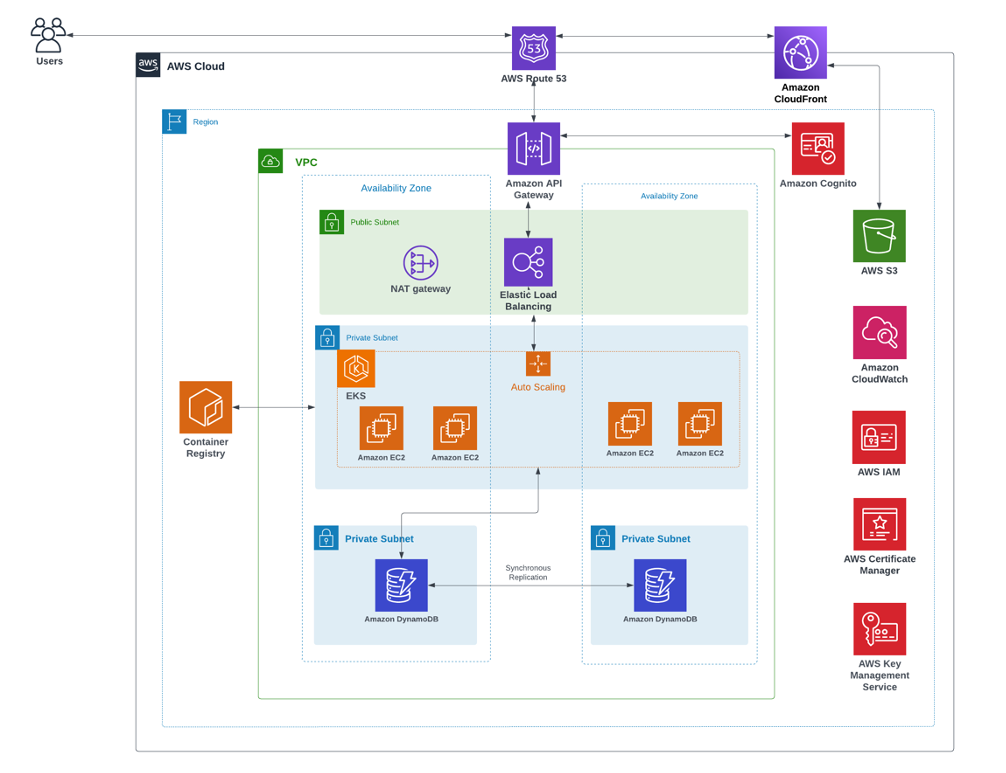
Ankercloud partnered with Regeny to build acloud-native, multi-tenant platform. We implemented a containerizedarchitecture leveraging Amazon ECS with Fargate for automatic scalingduring peak charging hours, eliminating infrastructure management overhead fortheir lean team.
The solution features an Elastic LoadBalancer providing path-based routing for three distinct user portals FleetAdmin, Fleet Manager, and Customer ensuring multi-tenant isolation. AmazonRDS PostgreSQL and DynamoDB with Multi-AZ configuration stores fleet registrations, vehicle details, and booking transactions, leveraging PostGIS extensions for geographic proximity search to identify nearest charging stations. The database resides in private subnets for enhanced security, whileECS tasks operate in public subnets with controlled internet access.
Key architectural decisions included choosing ECS over Lambda for long-running API connections needed for real-time charging station synchronization. The entire infrastructure operates within a dedicated VPC, with ECS Service auto-scaling dynamically adjusting capacity from 2 baseline tasks to 10+ during peak morning and evening charging periods.
Architecture:
Business Outcome
The transformation delivered measurable results across operational efficiency and business growth:
Operational Excellence:
- Booking confirmation time reduced from 45-60 minutes to under 5 minutes (91% reduction)
- Customer abandonment dropped from 38% to 12%
- Platform availability achieved 99.5% during peak hours
- Engineering overhead reduced from 6-8 FTE to 1.5 FTE for monitoring
Financial Impact:
- 68% reduction in operational costs by eliminating manual coordination overhead ($510K annually
- Infrastructure costs of $3,200-$8,500 monthly vs. $42,500 monthly for engineer salaries
- Three-year TCO projection shows $1.4M operational savings
- Eliminated fleet vehicle idle time costs ($2,500+ daily per vehicle)
Strategic Advancement:
- 75% engineering capacity redirected toward feature development
- Infrastructure now supports path to 10,000-station deployment target
- Positionedto secure long-term B2B fleet operator contracts across MENA region