Medotrax - Enabling Multimodal Digital Biomarkers Through Automated MRI Processing

Key Challenges
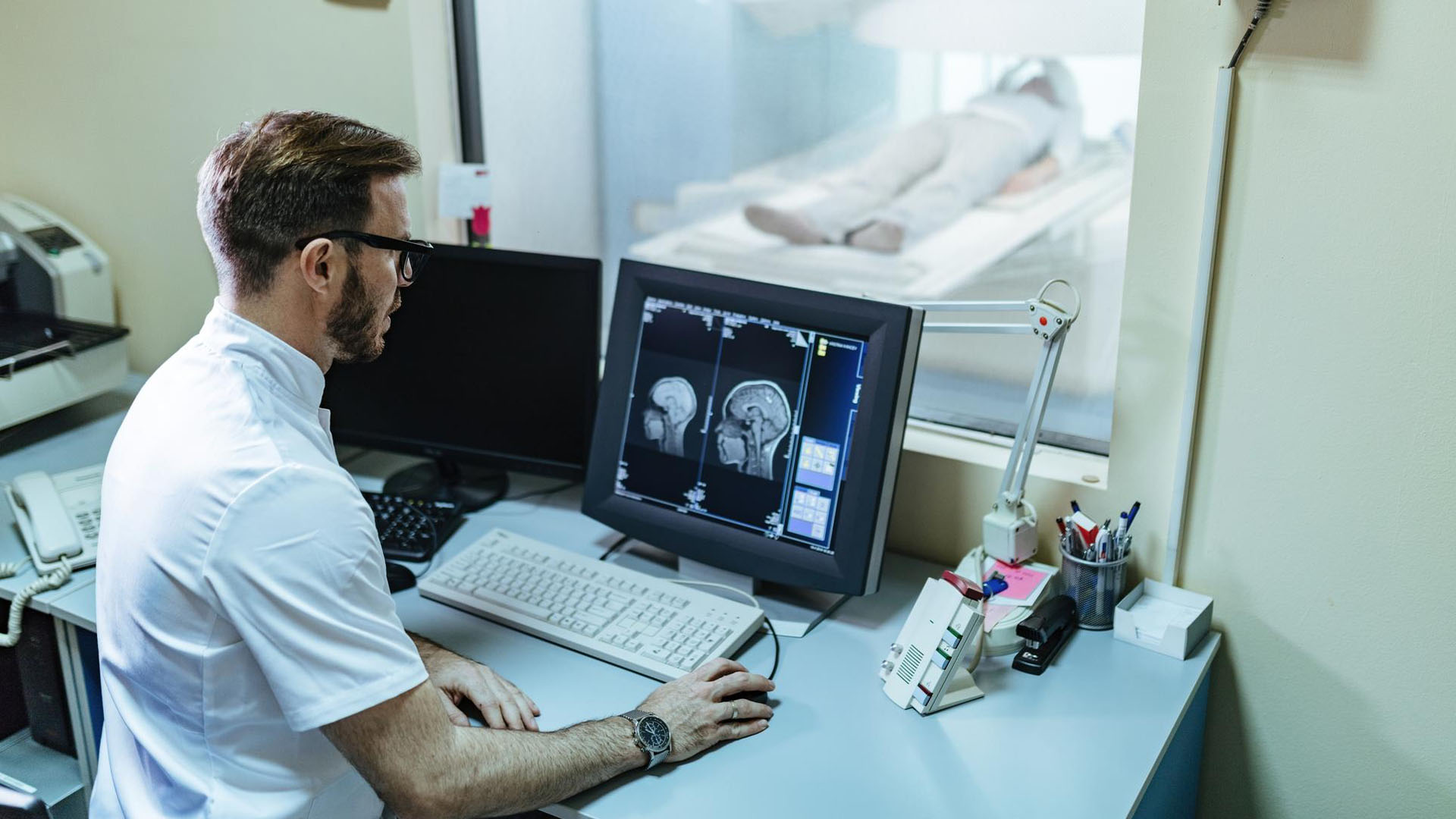
Medotrax needed a secure, scalable, and automated MRI processing infrastructure to support its growing digital biomarker initiatives. The organization faced challenges in anonymizing sensitive patient data, ensuring consistent MRI quality assessment, and scaling brain segmentation workflows while maintaining data privacy, reproducibility, and operational efficiency.
Key Results
In a joint collaboration under the AWS Business Outcome Xcelerator (BOX) program, Ankercloud delivered a cloud-native, automated MRI processing platform on AWS that streamlined data anonymization, quality control, and brain segmentation workflows. The solution improved operational efficiency, enabled elastic scaling with optimized costs, strengthened data governance and compliance, and provided standardized, reproducible imaging-derived biomarkers to support research, clinical studies, and future precision medicine initiatives.
Overview
Medotrax GmbH is a Munich-based digital health company focused on developing scalable solutions for the assessment, monitoring, and analysis of cognitive health. The company combines digital cognitive testing, neuroimaging biomarkers, patient-reported outcomes, and advanced analytics to support research and clinical innovation in neurodegenerative and neurological disorders, including Alzheimer’s disease and related dementias.
As Medotrax expanded its neuroimaging and digital biomarker initiatives, the company required a secure, scalable, and automated infrastructure capable of processing large volumes of MRI data while meeting stringent requirements for data privacy, quality control, and reproducibility.
To support these objectives, Ankercloud designed and implemented a cloud-native MRI processing platform on AWS. Leveraging its expertise in cloud architecture, automation, and scalable data processing, Ankercloud developed together with Medotrax the underlying technology infrastructure for MRI anonymization, quality control, and high-throughput segmentation workflows. The resulting platform enables Medotrax to efficiently integrate imaging-derived biomarkers into its broader cognitive health and analytics ecosystem while supporting future growth in research and clinical applications.
Challenges
As Medotrax expanded its neuroimaging and digital biomarker capabilities, the need emerged for a secure, scalable, and standardized MRI processing infrastructure capable of supporting research-grade biomarker generation while maintaining strict data protection and reproducibility requirements.
Key Objectives
1. Data Security and Standardization (Input Pipeline)
- Ingest raw DICOM data containing Personally Identifiable Information (PII).
- Remove all PII through anonymization.
- Convert images into the NIfTI format with facial features removed (defacing/skull stripping).
- Prepare data for downstream processing in a standardized format.
2. Quality Control (QC)
- Replace manual MRI quality assessment, which is not scalable and is prone to subjective errors.
- Detect poor-quality scans early to avoid incorrect tissue segmentation, biased volumetric measurements, and failures in automated tools.
3. Segmentation and Scalability
- Overcome limitations of manual segmentation and anatomical parcellation of T1-weighted MRI scans.
- Reduce time consumption and operator dependency.
- Enable GPU acceleration and dynamic cloud scaling for high-throughput processing.
Solution
To support Medotrax’s long-term vision of building a scalable digital biomarker platform, an automated cloud-native MRI processing workflow was established. The solution integrates seamlessly into Medotrax’s broader analytics environment while ensuring reproducibility, security, and operational efficiency.
The architecture enables:
- Automated ingestion of MRI data
- Anonymization of patient information
- Standardized image conversion
- Objective quality control
- High-throughput brain segmentation
This fully automated workflow allows Medotrax to efficiently generate imaging-derived biomarkers suitable for research studies, clinical collaborations, and future clinical-trial applications.
Key Stages of the Solution (Technical)
1. DICOM Anonymization & Conversion
- Raw DICOM data is uploaded to a secure cloud storage environment.
- An automated workflow anonymizes data and removes personally identifiable information.
- Output is reorganized into a standardized and secure structure.
- Imaging data is converted into a research-ready format for downstream analysis.
2. Automated Quality Control
- QC-ready scans are processed through an automated quality-control pipeline.
- The pipeline evaluates objective image-quality and tissue-consistency metrics.
- Each scan is classified as Pass, Warn, or Fail based on configurable thresholds.
- Automated gating ensures only acceptable scans proceed to analysis.
3. High-Throughput Automated Brain Segmentation and Biomarker Extraction
- Scans that pass QC are automatically submitted to a brain segmentation workflow.
- Cortical and subcortical parcellation is performed using scalable, GPU-enabled cloud compute environments.
- Structured outputs support downstream analytics, reporting, and integration into Medotrax’s broader digital biomarker platform.
Strategic Impact
The MRI processing infrastructure became a foundational component of Medotrax’s broader digital biomarker strategy. By enabling standardized and scalable neuroimaging analysis, the platform supports integration of imaging-derived biomarkers with cognitive assessments, patient-reported outcomes, and other clinical data sources.
This capability strengthens Medotrax’s ability to support:
- Observational research
- Clinical studies
- Future precision-medicine approaches in neurodegenerative disorders
- Collaborations with research institutions, healthcare providers, and life-science organizations
Business Outcome
The implementation of the cloud-native solution was executed under the AWS Business Outcome Xcelerator (BOX) program, designed to accelerate the process of design, build, and go-to-market for new solutions with a structured approach divided into phases.
The project delivered significant benefits across performance, operations, and clinical reliability.
1. Operational Efficiency
- Fully automated, event-driven architecture eliminated manual intervention in QC and segmentation workflows.
- Processing turnaround time was significantly reduced.
- Consistent, high-performance execution was achieved.
2. Scalability and Cost Management
- AWS Batch with Fargate was used for QC processing.
- GPU-enabled EC2 instances powered automated brain segmentation.
- The solution supports elastic scaling based on workload demand with a pay-only-for-execution model and zero idle compute cost.
3. Data Governance and Compliance
- No raw Protected Health Information (PHI) is written to S3.
- The pipeline enforces a standardized, auditable output structure for all processed data.
4. Clinical Reliability
- The automated QC framework produces clear, actionable outcomes (Pass/Warn/Fail).
- Subjective interpretation is reduced.
- Poor-quality scans are prevented from corrupting downstream volumetry and cortical thickness estimations.
5. Reproducibility
- The automated segmentation and biomarker generation pipeline produces standardized and reproducible outputs.
- Outputs integrate seamlessly into downstream analytics, reporting workflows, and clinical research applications.